Vienna Daughters' Day 2026 at IHS
A Recap with Petra Hirzer
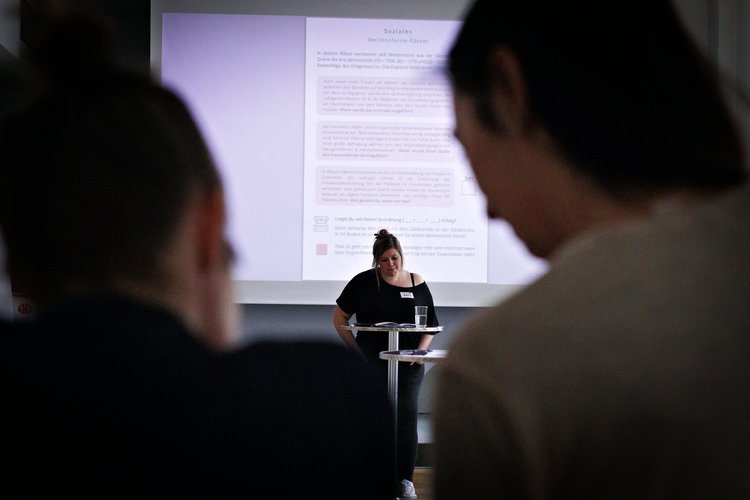
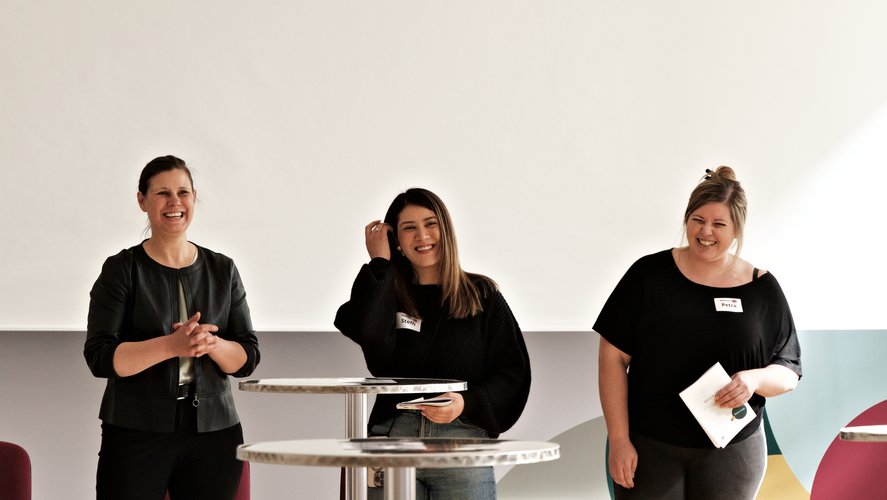
The event was organized by a team consisting of Petra Hirzer, Stephanie Egghart, and Clara Wimmer. In an interview, Petra Hirzer, speaking on behalf of the organizing team, shared insights into the concept, implementation, and the day itself.
Vienna Daughters’ Day aims to give girls and young women insights into professional fields that are still often seen as male-dominated. What motivated you to participate?
First and foremost, it was important to us to provide the participants with the most accessible possible introduction to research in the economic and social sciences. We wanted not only to offer insights, but also to spark interest and reduce possible inhibitions or uncertainties. We wanted to show who is behind the research. That is why we placed special emphasis on the visibility of our female researchers and on breaking down stereotypes surrounding the profession of “scientist.” The girls and young women should experience that they, too, can become active in these fields, which are still often male-dominated.
How did you put this idea into practice?
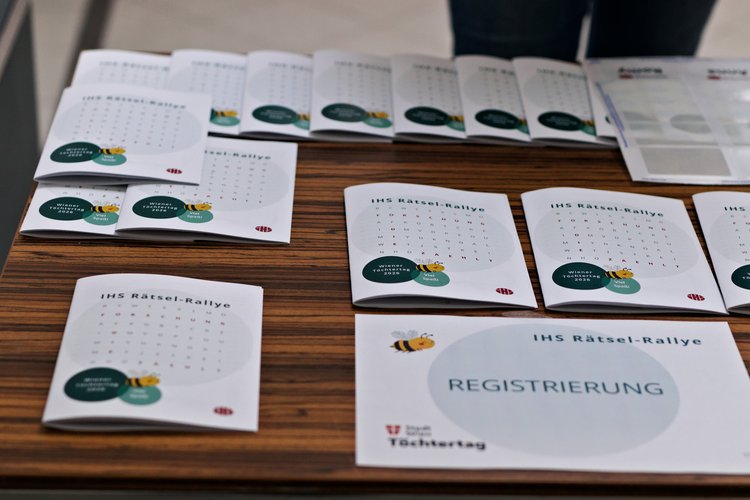
With this goal in mind, we wanted to create an event format that was informative, interactive, and at the same time exciting for the participants. This led to the idea of a puzzle rally centered around solving tasks in a playful way. Together with representatives from research and administration, we developed a puzzle booklet with a total of ten stations and different game mechanics. In this way, the girls and young women were able to explore the various areas of work at IHS actively and independently.
The institute’s research areas cover six policy fields, which are addressed by seven research units and two junior research groups. How did you manage to represent this broad range?
That was a challenge. It was not only about highlighting the individual areas, but also about showing how they come together at the institute and define IHS as a whole. That is why two elements were central at the beginning: a classic crossword puzzle was designed to reflect the thematic diversity of the research fields. For a quote-on-quote puzzle, video messages from our female scientists were recorded in advance. These could then be accessed via QR codes, and the participants had to correctly match the quotes printed in the puzzle booklet. In this way, we wanted to make both the breadth of the topics and the people behind them visible. The remaining puzzles were then dedicated to the IHS policy fields and the current research priorities of the research units.
How did you succeed in communicating complex scientific content in an understandable way?
The format was based on the concept of game-based learning. This means that participants engage with topics playfully and independently. We deliberately chose not to oversimplify the content. Instead, we trusted the girls and young women to engage with more complex topics and gave them space to explore them at their own level. One part of each puzzle station could be solved independently. The other part was designed so that participants could only solve it through discussion with experts. This is where our female scientists personally came into play.
How were the researchers involved during the event?
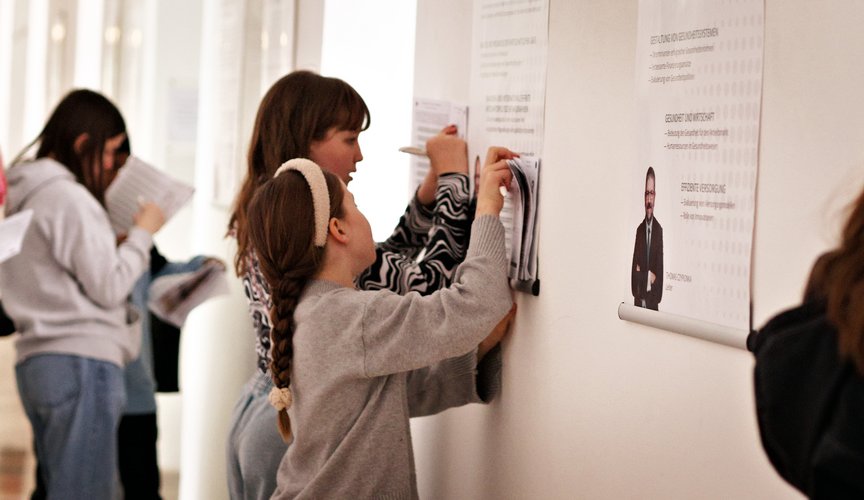
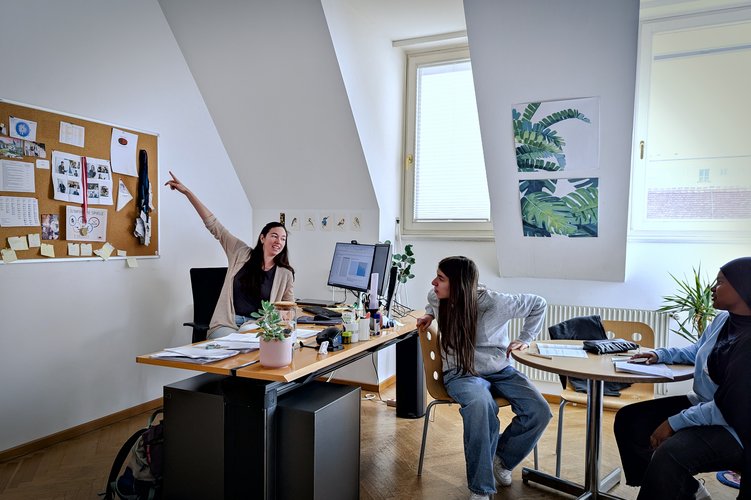
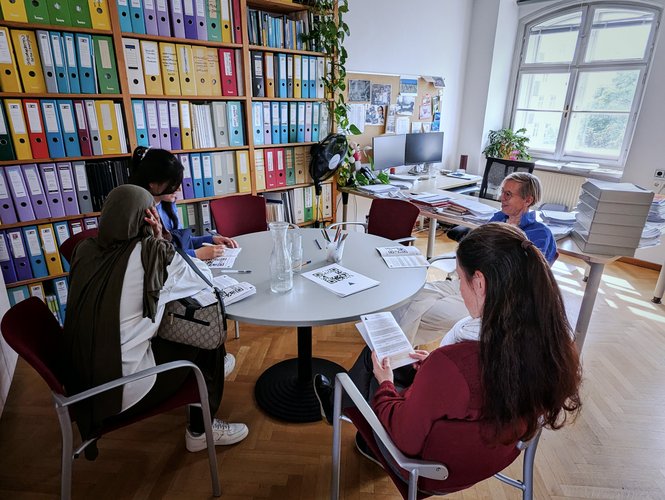
Many of our colleagues’ offices became central puzzle stations. Under the motto “Knock on my door and talk to me,” participants were encouraged to actively approach the female scientists. They could ask questions and gain direct insights into their work. This created a personal connection to research, which was incredibly important to us. And of course, the participants could also check their answers and get tips for solving the puzzle words. Through the fun of solving puzzles together, science could be experienced as something enjoyable.
Were there any particular challenges in implementing the event?
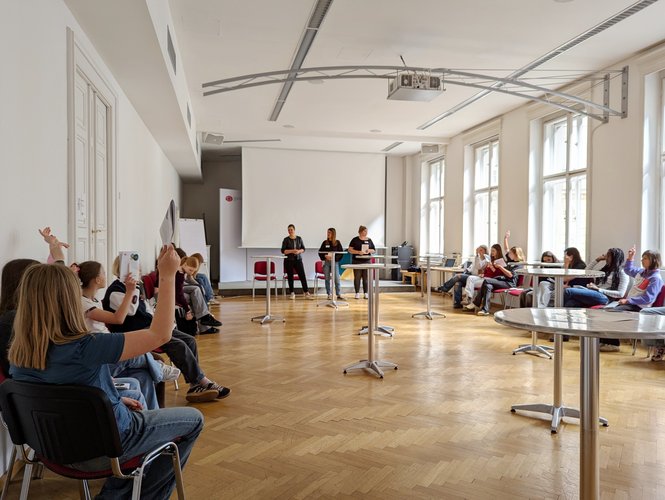
Yes, the heterogeneous age structure of the participants. We deliberately chose not to set an age limit. This allowed younger participants, such as daughters of employees, to take part as well. The youngest participant was 11 years old and the oldest 17. This age range required a flexible educational approach from everyone involved, both during the planning and implementation phases. It was especially wonderful to see how this approach was reflected among the participants themselves. For example, one group of younger girls and young women first asked me for help with a task, and then two older participants stepped in and solved it together with them.
What impressions have stayed with you?
Many participants, regardless of age, showed a high degree of independence. They consciously wanted to solve the tasks on their own. When asked whether they needed support, the response was often: “No, we can do it.” Beyond the exchange on the content itself, conversations also provided insights into their everyday realities. Topics such as catcalling, stereotypical gender roles, and differing perceptions of gender inequality were openly discussed. This also showed us how important such formats are - not only for sharing knowledge, but also as spaces for discussion and reflection on social issues.
What conclusions do you draw after Vienna Daughters’ Day?
It was an all-around wonderful and exciting day. For the participants, the fun of solving puzzles was clearly at the center of the experience, and that was noticeable throughout the day. At the same time, we also witnessed what empowerment can look like. Formats such as Vienna Daughters’ Day are intended to strengthen the self-confidence of girls and young women and break down stereotypes. At IHS, we wanted to give participants the opportunity to experience that female scientists are approachable and work on exciting, relevant topics. This can shape their understanding of the paths that are open to them in research and academia.
The IHS Puzzle Rally at a Glance
As part of Vienna Daughters’ Day, the participants completed a puzzle rally consisting of ten stations throughout the institute. The tasks were based on specific research topics and were developed together with female scientists from the individual research units.
In addition to puzzles that could be solved independently, there were also stations that required direct interaction with researchers. Under the motto “Knock on my door and talk to me,” the girls and young women were able to ask questions and gain insights into everyday research life.